














Register Today! RCPA 2026 Annual Membership Meeting on June 2



At midnight on May 1, 2026, the Department of Human Services will open applications for the first opportunity to receive Rural Health Transformation Program (RHTP) funding. $25M of grants will be awarded, with a $1M maximum per qualified hospital, healthcare provider, and rural health facility for equipment, supplies, renovations, or structural improvements.
Key Details:
To receive an RHTP payment, qualified entities must complete and submit the eligibility certification. The payment must stabilize or enhance rural health care access, promote rural well-being, and fall under one of the six initiatives in the Department’s federally approved RHTP application:
Please note, this RHTP payment is an initial opportunity. If you do not qualify for this RHTP payment and want to apply for funding for other purposes, a future opportunity may be a better fit.
See the PA Bulletin announcement here. Please contact RCPA COO Jim Sharp with any questions.

ADvancing States, in partnership with the National Association of State Directors of Developmental Disabilities and the National Association of Medicaid Directors, is excited to share a new infographic on the purpose, value, and impact of Medicaid HCBS. This resource includes an overview of key services, facts, and figures on HCBS utilization and spending, and trends and growth through rebalancing efforts. ADvancing States encourages members to use and share this infographic as a foundation for conversations about Medicaid HCBS. Use this link to view and download the infographic.

Please disregard this reminder if you have already registered.
On Monday, May 11, 2026, RCPA will be hosting a virtual H.R. 1 Medicaid Summit for all members, non-members, and stakeholders from 9:00 am – 10:00 am. This virtual summit will explore the role of providers, advocates, and stakeholders in the process of ensuring access and care for vulnerable Pennsylvanias. Panelists will include:
Register Here to Attend This Informative Summit
As part of the event, we will have a Q&A segment. If you have any questions you would like to ask during the Q&A segment, or if you have any general questions regarding the virtual summit, please forward them to RCPA Behavioral Health Policy Associate Emma Sharp.

Temple University is conducting a survey to better understand and improve employment services for people with disabilities in Pennsylvania, including those who use languages other than English.
This information will be included in the Comprehensive Statewide Needs Assessment (CSNA), conducted in collaboration with the Office of Vocational Rehabilitation (OVR) and the Pennsylvania Rehabilitation Council (PaRC), and will inform the State Plan.
You are eligible if you:
The survey takes approximately 15–20 minutes to complete. It asks about your experiences providing employment services, including challenges, supports, and training needs. Participants will receive a $25 gift card.
Participate in the survey, or learn more
Thank you for considering this opportunity to share your experiences and improve services for people with disabilities who speak languages other than English.

Family-Centered Care: One Organization’s Revolutionary Approach to Include Families in All Aspects of Care
Due to a widespread technical malfunction, this webinar was rescheduled from Monday, April 20, to Monday, April 27. If you wished to attend the webinar and were unable to make the April 20 date, you can now register for April 27 at 1:00 pm!
Monday, April 27, 2026
1:00 pm – 2:00 pm EST; 12:00 pm – 1:00 pm CDT;
11:00 am – 12:00 pm MDT; 10:00 am – 11:00 am PDT
Register Here
Donna Provenzano, Director of Family-Centered Care
Donna Provenzano is the Director of Family-Centered Care at Children’s Specialized Hospital. She has thirty-nine years of experience in working with children, adolescents, young adults, and their families at Children’s Specialized. Donna serves on several hospital leadership committees and councils and provides administrative and operational management of Family-Centered Care and Volunteers. She supervises and partners with Family Faculty staff and coordinates with the Family Advisory Council. Donna has presented both nationally and internationally on Patient- and Family-Centered Care. Under Donna’s leadership, her department received the IPFCC Family-Centered Care Partnership Award for Social Determinants of Health (SDOH) in 2022. Donna has received additional leadership certifications from the Harvard Business School. She received her Bachelor of Science degree in Therapeutic Recreation from Ithaca College.
Linda Waddell, Family Faculty Manager
Linda Waddell is the Family Faculty Manager at Children’s Specialized Hospital. She has been employed at the hospital as a Family Faculty since June of 2008 and a member of the Children’s Specialized Hospital’s Family Advisory Council since 2014. On behalf of the hospital, Linda has presented with her team on Patient- and Family-Centered Care at regional, national, and international conferences. Most recently, Linda was a member of a panel that presented at the 2024 RISE Summit “Addressing Social Determinants of Health (SDOH): A Look into Children’s Specialized Hospital’s Program in NJ and Beyond.” Linda participates in various hospital committees and is also a member of the IPRC Steering Committee, where she provides a family member’s perspective for discussions and decision-making.
Linda was the 2019 recipient of the Lester Z. Lieberman Humanism in Healthcare Award and received the IPFCC 30th Anniversary 2022 Partnership Award on Social Determinants of Health. Linda received her Bachelor of Science degree in Business Management from Kean University. Linda’s first experience with Children’s Specialized Hospital began in 1999, receiving multiple services for her newborn, medically fragile baby. She became an expert in the experience of pediatric rehabilitation through caring for her daughter with medical complications.
Family Faculty at Children’s Specialized Hospital are paid positions held by parents and family members whose children have received or are still receiving services at Children’s Specialized Hospital Inpatient, Outpatient, or Long-Term Care sites. Their own day-to-day experiences provide a unique perspective, understanding, and empathy for families going through similar situations. Family Faculty partner with staff and families to build a respectful and understanding relationship by listening, providing insights, and encouraging positive communication between staff and families.
Objectives: At the end of this session, the learner will identify strategies to:
Audience: This webinar is intended for all interested members of the rehabilitation team.
Level: Beginner-Intermediate
Certificate of Attendance: Certificates of attendance are available for all attendees. No CEs are provided for this course.
Complimentary webinars are a benefit of membership in IPRC/RCPA. Registration fee for non-members is $179. Not a member yet? Consider joining today.

Palliative Care Through the Rehab Continuum: Caring for Children With Complex Needs
Thursday, May 14, 2026
12:00 pm – 1:00 pm EDT; 11:00 am – 12:00 pm CDT;
10:00 am – 11:00 am MDT; 9:00 am – 10:00 am PDT
Register Here
Kara Monnin, PhD
Kara Monnin is a Clinical Assistant Professor of Pediatrics at Nationwide Children’s Hospital (NCH) and Ohio State University’s School of Medicine in Columbus, OH. She provides clinical services across multiple inpatient units, including Complex Healthcare, Inpatient Physical Medicine and Rehabilitation, and acute care services (PICU, Trauma/Surgery/Neurosurgery). Dr. Monnin also serves as a member of the Advanced Illness Management/Palliative Care Team at NCH, and she specializes in traumatic brain injury, rehabilitation populations, and children and adolescents with complex medical needs.
Ryan Jenkins, MD
Ryan Jenkins is a Clinical Assistant Professor of Anesthesiology and a pediatric hospice and palliative medicine physician on the Advanced Illness Management Palliative Care Team at Nationwide Children’s Hospital. He provides inpatient, outpatient, and home-based palliative and hospice care to patients and families across the Nationwide Children’s healthcare system. His academic work includes the teaching of primary palliative care skills to learners of different disciplines and backgrounds.
Objectives: At the end of this session, the learner will:
Audience: This webinar is intended for all interested members of the rehabilitation team.
Level: Beginner-Intermediate
Certificate of Attendance: Certificates of attendance are available for all attendees. No CEs are provided for this course.
Complimentary webinars are a benefit of membership in IPRC/RCPA. Registration fee for non-members is $179. Not a member yet? Consider joining today.
Due to a widespread technical outage, IPRC will need to reschedule the “Family-Centered Care” webinar that was scheduled for today, April 20, at 11:00 am. The new date and time will be Monday, April 27, at 1:00 pm. If you have already registered, you do not need to re-register.
We apologize for the inconvenience. Please contact Cindi Hobbes if you have any questions.
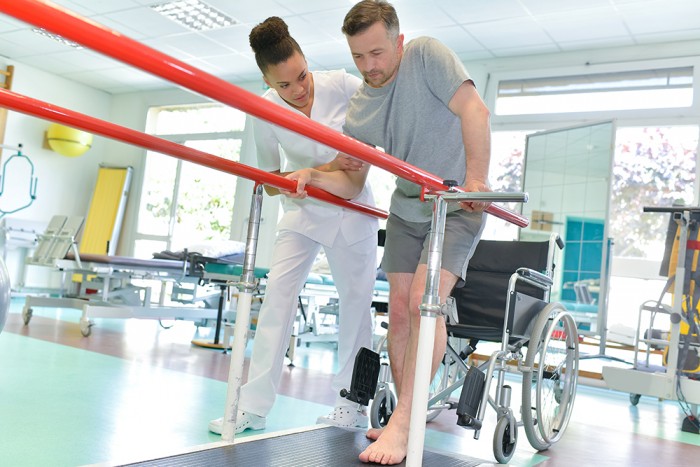
The Centers for Medicare and Medicaid Services (CMS) recently released the fiscal year (FY) 2027 hospital inpatient prospective payment system (IPPS) proposed rule. Included in this rule is a proposal for the expansion of CMS’s Comprehensive Care for Joint Replacement (CCJR) model nationwide to improve care coordination and reduce costs for Medicare patients undergoing hip, knee, and ankle replacements. The model would hold hospitals accountable for the full episode of care, including surgery and 90 days of recovery, encouraging better outcomes and a more efficient use of resources.
For background purposes, from April 2016 through December 2024, the CMS Innovation Center tested the CJR Model to improve care for Medicare patients undergoing joint replacement procedures. During that time, the model generated significant Medicare savings while maintaining quality of care for beneficiaries. Under the CJR Model, hospitals were held responsible for Medicare spending for the joint replacement surgery, the hospital stay, and the first 90 days of recovery, including follow-up care such as physical therapy.
Based on the evaluation of the CJR Model, the CJR Expanded (CJR-X) Model would create strong incentives for hospitals to coordinate care more effectively, avoid unnecessary services like avoidable re-hospitalization and emergency care, and focus on delivering the best outcomes for patients. It would specifically encourage better communication with post-acute care providers to support recovery. Beginning October 1, 2027, CJR-X would be required for most hospitals, making it the first mandatory, nationwide test of an episode-based payment model.
Comments on the proposed rule are due by June 9, 2026.

The Brain Injury Advisory Board (Board), established under section 1252 of the Federal Traumatic Brain Injury Act of 1996 (42 U.S.C. § 300d-52), will hold a public meeting on May 1, 2026, from 10:00 am – 3:00 pm. The meeting will be held in person at the Health and Human Services Building, 7th Floor, Conference Room A, 625 Forster Street, Harrisburg, PA 17120. A virtual meeting option is available via Microsoft Teams. To join the Microsoft Teams meeting, call (267) 332-8737. The phone conference ID is 428991948#.
Meeting materials will be sent out before the meeting and will also be available on the Department of Health’s (DOH) website. Questions should be sent to Nicole Johnson electronically.
DOH’s Head Injury Program (HIP) strives to ensure that eligible individuals who have a traumatic brain injury (TBI) receive high quality rehabilitative services aimed at reducing functional limitations and improving quality of life. The Board assists DOH in understanding and meeting the needs of persons living with acquired brain injuries, both traumatic and nontraumatic, and their families. This quarterly meeting will provide updates on a variety of topics, including the number of people served by HIP. In addition, meeting participants will discuss budgetary and programmatic issues, community programs relating to traumatic and nontraumatic brain injuries and available advocacy opportunities.
For additional information or for persons with a disability who wish to attend the meeting and require an auxiliary aid, service, or other accommodation to do so, contact Nicole Johnson, Division of Community Systems Development and Outreach, (717) 772-2763. For individuals who need assistance with speech or for deaf or hard of hearing persons, contact the Pennsylvania Hamilton Relay Service at (800) 654-5984 (TDD users) or (800) 654-5988 (voice users).
