
SUD Treatment Services Division

A Subdivision of the Behavioral Health Division

View the 2026 SUD Treatment Services Priorities

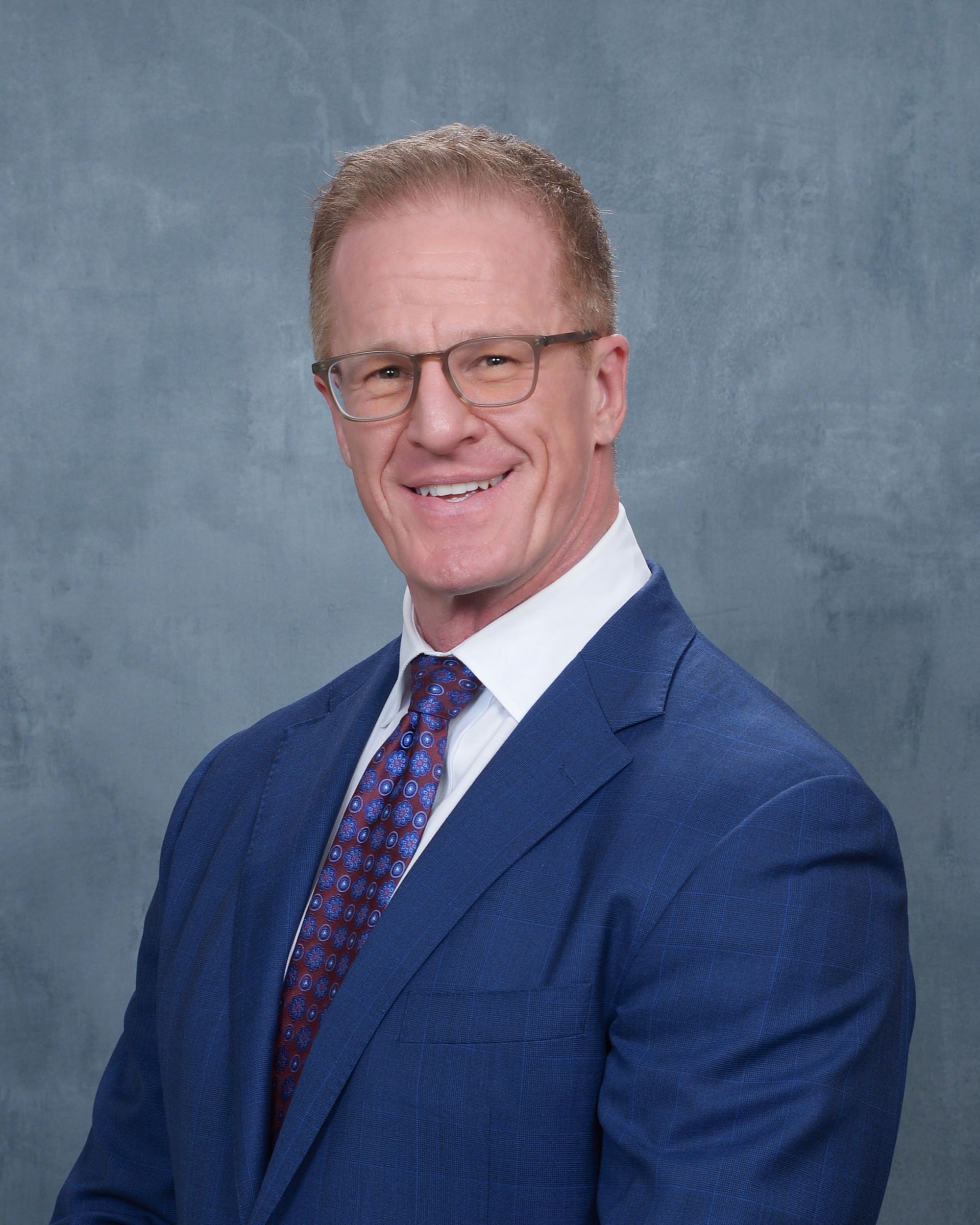
Division Director: Jason Snyder 


Jason Snyder is responsible for leading RCPA’s drug and alcohol treatment provider members in developing and executing effective strategies to influence policy, regulations, and legislation in ways that enhance the environment in which they operate. Prior to joining RCPA, Jason was director of strategic partnerships for Pinnacle Treatment Centers, a large addiction treatment provider with nearly 130 facilities across the country. He also worked for Pinnacle as regional director of operations, overseeing seven opioid treatment programs. Jason has significant experience working in state government as well. He served as special assistant to the secretary of the Pennsylvania Department of Human Services (DHS), where he oversaw implementation and operations of the Opioid Use Disorder Centers of Excellence. He also was communications director for the Pennsylvania Department of Drug and Alcohol Programs (DDAP). Jason has served on several nonprofit boards of directors, including RCPA and Gateway Rehab. A lifelong Pennsylvanian, Jason lost both of his siblings to drug overdose deaths and is in long-term recovery from the disease of addiction.

A person with short, light brown hair wearing a dark pinstripe suit and a light green tie, smiling against a brown backdrop.

Contact Information

Email: jsnyder@paproviders.org

Main: 717-963-3612

Direct: 412-292-2653


2026 SUD Treatment Services Committee Meeting Schedule

  • March 10
  • June 9
  • September 8
  • December 8

View the Latest on the Behavioral Health Blog

Visit here to view the complete Behavioral Health blog.

The word
By Jason Snyder, Director, SUD Treatment Services, BH Division March 11, 2026
US Health and Human Services (HHS) Secretary Robert F. Kennedy Jr.’s beliefs and philosophy on addiction and recovery can elicit strong emotions and reactions. There are some who refer to him as a “crackpot,” pushing antiquated, ineffective, and potentially dangerous solutions instead of focusing on evidence-based treatments and programs that research has demonstrated to be effective. His promotion of “ healing farms , ” for example, has been much maligned among some advocacy movements. To other, less vocal camps, Kennedy is a sane voice in the wilderness, a sage put in a position of power to not only carry a message of real recovery but to implement policies that align with his own experience. He is not shy about his recovery from addiction through a 12-step program for which a higher power is a foundational element. President Trump’s recent executive orde r establishing the Great American Recovery Initiative is the most concrete example yet of Kennedy’s opportunity to imprint the treatment and recovery system. According to a Feb. 2 press rel ease from HHS , “The centerpiece of this plan is a $100 million investment to solve long-standing homelessness issues, fight opioid addiction, and improve public safety by expanding treatment that emphasizes recovery and self-sufficiency.” The $100 million will fund a pilot program called STREETS – Safety Through Recovery, Engagement and Evidence-Based Treatment and Supports. It intends to build “integrated care systems for people experiencing homelessness, substance abuse and mental health challenges and helping them find housing and employment.” Reaction has been lu kewarm at best and highly critical at worst , likely in part to the dearth of details about the pilot program, including basic information about how the program will actually operate as well as which eight cities will be included. Moreover, this very work to attempt to integrate beyond physical and behavioral health to include health-related social needs has been going on in communities for many years. In addition, the Trump administration’s ongoing negative rhetoric about and actions toward harm reduction and its whipsaw approach to SAMHSA grant funding have generated skepticism and criticism. Kennedy himself is a reason for much of the apprehension. His unabashed embrace of abstinence, spirituality, and God—hallmarks of 12-step programs that many advocates have continually criticized for their doctrine of powerlessness over addiction—feels threaded throughout STREETS. In fact, Kennedy intends to “welcome full participation from faith-based organizations in (SAMHSA’S) programs and activities.” And descriptions of his own recovery seem to differ from what had been a recently emerging mentality that claimed someone is in recovery when they say they’re in recovery, despite other personal actions that may conflict with longstanding recovery beliefs. Yet to this point, Kennedy has not implemente d any policies that have directly limited access to medications to treat addiction. As well, there is an argument to be made that his emphasis on connection, spirituality, and religion are, in fact, rooted in science . Is Kennedy’s approach and demeanor at times hard to accept? Is he (even purposely) out of touch with or dismissive of how the public discourse and science have evolved over the past 15 to 20 years? For many, yes. C onsider the example of how he refers to “addicts” and “alcoholics” in recently launching a bipartisan initiative called Action for Progress with his cousin Patrick Kennedy. Still, he has the opportunity t o walk the tightrope to leverage his experience and philosophies in a way that improves the treatment model in place today, creating a stronger continuum of care—including medication and other evidence-based practices—for those suffering from substance use disorder, enabling social connectedness, sense of community, belongingness, and meaning and purpose. Not only are these values Kennedy holds, they are key tenets of SAMHSA’s working definition of recovery . With his first sub stantive SUD initiative in his hands, time will soon tell whether he can—or is willing—to walk that line.

SUD Treatment Services Division Posts

Microscope hovering over a PowerPoint document
By Fady Sahhar May 27, 2026
On May 27, 2026, RCPA member Community Behavioral Health (CBH) held a monthly meeting for Community HealthChoices providers to communicate with and improve access to behavioral health services. Below are the materials shared in the meeting: Community Behavioral Health PowerPoint Presentation Supportive Peer Services One Pager Training Resources for CHC Providers If you have any questions, please contact Fady Sahhar .
Blue “MEMBER NEWS” text on a white and blue banner
By Jason Snyder May 27, 2026
Press Release from PSU : Published May 25, 2026
Red binder for Applications on top of a yellow binder for Grants next to office supplies
By Jason Snyder May 26, 2026
The Pennsylvania Commission on Crime and Delinquency (PCCD) is now accepting applications for funding under the 2026–2027 Byrne Justice Assistance Grant (JAG) solicitation from eligible governmental and non-governmental agencies and organizations seeking to implement projects and programs that directly address the objectives and goals outlined in PCCD’s approved 2026–2030 Strategic Framework . Eligible organizations include local units of government (including counties) and non-profit organizations. A total of $8,221,880 in federal Byrne JAG funds is being announced to support this initiative. PCCD expects to fund approximately 30–35 grants with budgets not to exceed $250,000 over the two-year project period. The funding announcement details new guidelines regarding eligibility criteria, eligible program activities, and documentation. Applications must be submitted electronically through PCCD’s Egrants system by July 14, 2026. Questions regarding this funding announcement should be emailed with “2026/27 Byrne Justice Assistance Grant (JAG)” as the subject line. Questions must be received by close of business on July 7, 2026. All questions and answers will be posted under this funding announcement title on the Active Funding Announcements page of the PCCD website.
Stethoscope with a
By Fady Sahhar May 26, 2026
Press Release from the Department of Human Services : Published May 14, 2026
OMHSAS logo surrounded by light blue border
By Jim Sharp May 22, 2026
The Office of Mental Health and Substance Abuse Services (OMHSAS) will be hosting two (2) one-hour virtual Listening Sessions on the 55 Pa. Code Chapter 5250 Crisis Licensing Regulations. The Listening Sessions are intended to provide a high-level summary of changes being made to the final form package based on the comments received and to gather provider perspectives on those specific areas. Please register for one of the two session dates being offered by selecting the appropriate link below. Session 1: Tuesday, June 9, from 10:00 am – 11:00 am Session 2: Monday, June 15, from 1:00 pm – 2:00 pm After completing your registration, you will receive an email confirmation containing instructions to join the webinar. If you experience any issues with the registration process, please email . The RCPA Crisis Regulation Review Team will meet in late June as a follow-up to the listening session to develop further recommendations based upon OMHSAS’s prospective changes. If you are interested in being a part of this review team, please contact RCPA COO and Mental Health Policy Director Jim Sharp .
National Council for Mental Wellbeing rectangular orange logo
By Jim Sharp May 22, 2026
Message from the National Council for Mental Wellbeing: Yesterday, the Centers for Medicare and Medicaid Services (CMS) released its proposed rule, Medicaid Managed Care State Directed Payments and Medicaid Fee-for-Service Targeted Medicaid Practitioner Payments , implementing provisions of H.R.1 to establish new limits on certain Medicaid managed care State directed payments (SDP). Additional information on the proposal can be found in the press release and fact sheet . In alignment with H.R.1, total SDP rates are capped at 100% of Medicare in expansion states and 110% in non-expansion states for inpatient hospital services, outpatient hospital services, nursing facility services, and qualified practitioner services at an academic medical center. Where a Medicare benchmark is unavailable, the payment limit would be 100% of the state-plan-approved rate. However, most significantly, the proposed rule would extend the SDP limits beyond the four original services under H.R.1 (listed above) to all SDPs, regardless of service type, in all states, Washington, D.C., and all territories beginning Jan. 1, 2029. The proposed rule would also apply similar limits to certain targeted Medicaid fee-for-service payments. This would include behavioral health SDPs and could lead to significant disruption in 2029. Additional provisions in the proposed rule include proposals to: Eliminate uniform increase SDPs as a permissible type of SDP for rating periods beginning on or after January 1, 2028, with a limited exception for grandfathered SDPs. Permit states to adopt minimum or maximum fee schedules that are no greater than the applicable payment rate limit without CMS prior approval for rating periods beginning on or after January 1, 2028. Establish new claims-level compliance and reporting requirements, including submission of provider-specific (NPI-level) data, identification of applicable benchmark rates, and documentation of controls to ensure that each individual service payment does not exceed the cap. Introduce new reconciliation requirements for value-based payment SDPs, requiring states to demonstrate post-period compliance with the cap at the service level. The rule specifies that payments exceeding the cap constitute Medicaid overpayments subject to recovery and reporting requirements, explicitly linking SDP limits to existing overpayment regulations. The rule is set to be formally published in the Federal Register on May 22, with a 60-day comment period following its publication. The National Council will continue to further review this proposal, provide you with timely updates, and will plan to submit comments on this rule. We are here to support you every step of the way through these changes. For additional information on H.R.1, please visit the National Council’s H.R.1 Hub . If you have any questions, please reach out via email .

Additional Resource Links